
These are a few memes that I created which I feel relates to the overall theme of this blog. They are very relatable to a person that would enjoy a blog like this one, as they describe different aspects of the live concerts and situations that typically arise for fans of jam bands. Memes, whether they want to or not, typically have ideals, which is the “concept or idea conveyed” (Davison) by the meme. My first meme’s concept involved free-standing venues without seating, during which you are free to run around the entire place, bouncing from spot to spot and taking in different views of the stage throughout the show.

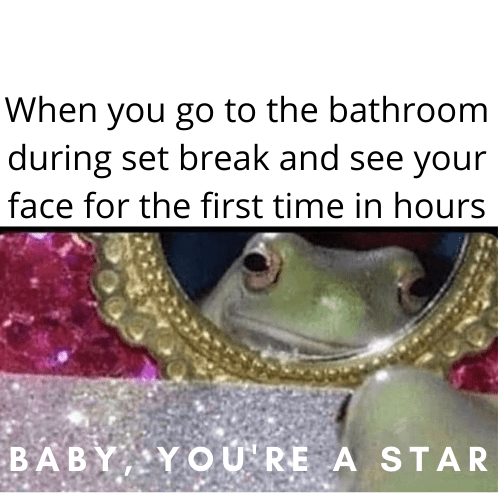
The second meme focuses on the feeling one has after they have been watching a face-melting concert for the past 90 minutes, and are now looking back to reality during their trip to the bathroom. It might seem like a ridiculous idea for a meme, but I can guarantee that someone who enjoys my blog would understand what I am attempting to convey.
The third meme’s ideal revolves around the conversations that we (jam band lovers) commonly have with people outside of the demographic. These people typically only see a concert once a year, and if they see a band once they probably won’t be seeing them again for a long-time due to repeat performances. But, jam band fans will see the same band or bands multiple times a year. It is not uncommon for a fan to see the same band many nights in a row, as every night has a completely different set list.

The actions taken to create memes is known as the “behavior” (Davison). It is the steps taken to bring the meme to reality, which is essentially “photographing…and manipulating the photograph with software” (Davison). The behavior of a few of my memes included finding a still picture from Saturday Night Lives “super fans” skit, and a still picture from the episode of “The Office” in which Michael Scott is briefly into parkour. My other meme was derived from an old meme that I saw once, which described a hungover person looking into the mirror in the morning, and showed the picture of a frog looking at itself in the mirror. For that meme, I customized the photo by adding “Baby, you’re a star” for good measure. After I determined the perfect photo, I added in the classic “when ( this happens )” to prompt the picture I chose. But, for my third meme, I went with a more recent meme prompt which is conversational and aims to describe an interaction that would be common amongst my audience.
The manifestation of a meme is a described by Patrick Davison as what is “observable,” this includes “any arrangements of physical particles in time and space that are the direct result of the reality of the meme” (Davison). The manifestation of my memes includes the combination of relevant stills from popular TV shows that allow the audience to comprehend the message. Obviously, if my meme was created before SNL or The Office, my audience would not totally understand the meme. This point in time is one when this meme is understood by most people because they have seen the shows I included. My specific manifestations appeal to my audience or peers because they include famous scenes from television that they would find charming or enjoyable.
Davidson, P (2012) The language of internet memes. The social media reader. file:///Users/garrettjordan/Downloads/w14%20davison-thelanguageofinternetmemes.pdf
 jambabushka.music.blog